Andrew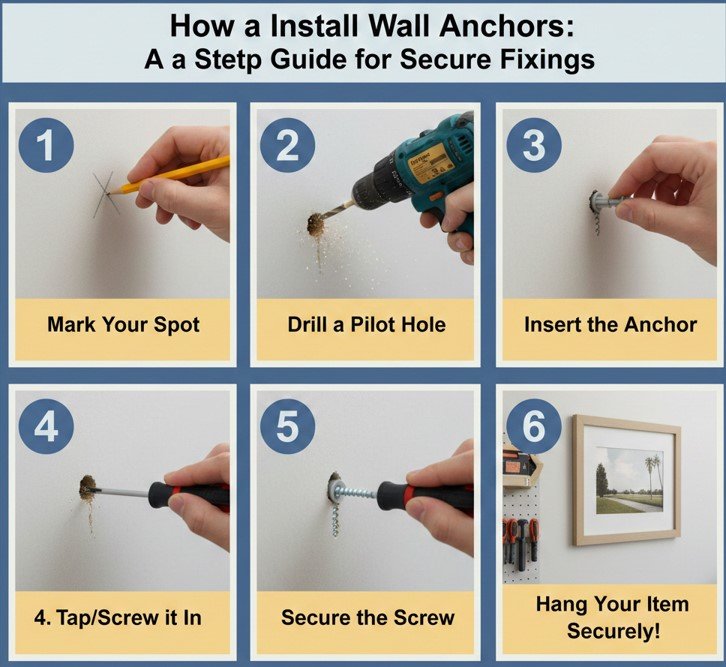
Wall anchors are essential for hanging heavy objects securely on your walls, whether you’re setting up shelves, installing curtain rods, or mounting picture frames. They ensure that screws stay in place and prevent objects from falling off the wall. If you’ve ever tried to hang something only for it to fall after a short time, you know how important it is to install wall anchors properly.
In this comprehensive guide, we’ll explain how to install wall anchors for various wall types, including drywall, plaster, stucco, and wood. Whether you’re a DIY enthusiast or a beginner, we’ll provide you with all the details, including the tools you’ll need, step-by-step instructions, and tips for achieving the best results.
Why Wall Anchors are Essential
Wall anchors are designed to provide a secure fixing for screws when there’s no stud available to screw into. Without anchors, screws can loosen over time, causing items to fall or even damage the wall. Here’s why wall anchors are essential:
• Support heavy objects: Anchors distribute weight evenly, ensuring heavy objects like shelves, mirrors, and curtain rods stay in place.
• Prevent wall damage: Without wall anchors, screws can damage your wall and leave visible holes, especially in softer materials like drywall or plaster.
• Improved security: Wall anchors keep objects securely mounted, reducing the risk of accidents, especially with heavy or valuable items.
• Works on various surfaces: Anchors allow you to securely attach items to walls made of different materials, including drywall, plaster, and brick.
• Versatility: Different types of anchors are available for specific applications, from lightweight items to heavy-duty installations.
• Ease of installation: Installing wall anchors is easy with the right tools and techniques, even for beginners.
Now that you understand the importance of wall anchors, let’s dive into how to install wall anchors correctly for various applications.
Also Read:- How to Apply Cologne: A Step-by-Step Guide for Lasting Fragrance
How to Install Wall Anchors for Screws: General Overview

Installing wall anchors for screws is a straightforward process, but selecting the right type of anchor and applying the correct technique is key to a secure installation. Here’s how to install wall anchors for screws effectively:
• Choose the right anchor
Select the correct wall anchor depending on the material and weight of the item you’re hanging. For example, plastic anchors are ideal for light-duty applications, while metal anchors are better for heavy-duty installations.
• Mark the spot
Use a pencil to mark the location where you want to install the anchor. Make sure it’s level and aligned with any pre-drilled holes in the object you’re hanging.
• Drill the hole
Using a drill bit that matches the size of the wall anchor, drill a hole into the marked spot. For most anchors, the hole should be slightly smaller than the anchor itself, ensuring a tight fit.
• Insert the anchor
Gently tap the anchor into the hole with a hammer, ensuring it’s flush with the wall. If you’re using a toggle anchor or one with wings, the wings will expand once inserted, providing extra holding power.
• Screw into the anchor
Once the anchor is secured in place, insert the screw through the object you’re hanging and tighten it into the anchor. Make sure not to overtighten, as this can damage the anchor or wall.
• Test the anchor
Gently tug on the object to ensure it’s firmly attached to the wall. If it feels loose, double-check the anchor installation and consider using a larger or stronger anchor.
Also Read:- How to Get Rid of a Tan: Expert Tips for Fast and Effective Results
How to Install Wall Anchors in Drywall: Easy Steps for Strong Support
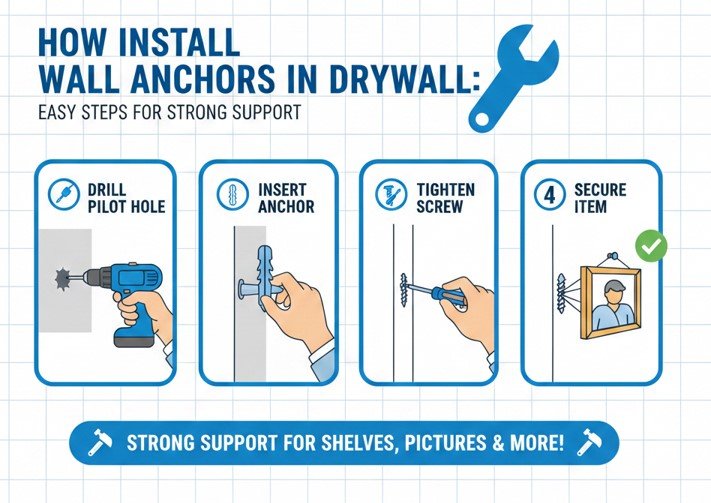
Drywall is one of the most common wall materials, but it can be tricky to work with since it doesn’t have the inherent strength of wood or masonry. To securely mount items, you’ll need to use the right wall anchors for drywall.
• Select the right anchor for drywall
For drywall, use anchors such as plastic expansion anchors, toggle bolts, or molly bolts, depending on the weight of the object you’re hanging. Plastic anchors are great for light-duty, while toggle bolts provide better support for heavier items.
• Mark your mounting location
Use a tape measure and level to mark the spot where you want the object to hang. Ensure your marks are even to avoid misalignment.
• Drill a hole for the anchor
Use a drill bit that’s the same size or slightly smaller than your chosen anchor. Drill the hole carefully, making sure it’s deep enough to house the entire anchor.
• Install the anchor into the drywall
Gently insert the anchor into the drilled hole. If you’re using a plastic anchor, simply push it in until it’s flush with the wall. For toggle bolts, insert the anchor into the hole and tighten it so the toggle expands behind the drywall.
• Insert and tighten the screw
Once the anchor is installed, insert the screw through your object and into the anchor. Tighten the screw to secure the item. Avoid overtightening, which can damage the drywall.
• Double-check the stability
Test the object to make sure it’s secure. If the anchor feels loose, you may need to switch to a stronger anchor or adjust its position.
Also Read:- How to Become a Judge: The Complete, Expert Guide
How to Install Wall Anchors in Plaster: Techniques for Fragile Walls
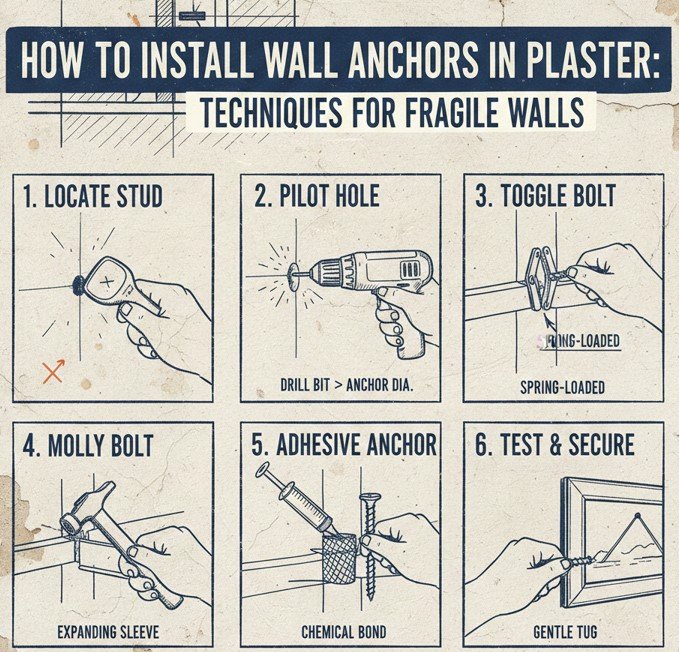
Plaster walls are more brittle and prone to cracking than drywall, so it’s essential to use the right technique and anchor to avoid damaging the wall. Here’s how to install wall anchors in plaster:
• Select a plaster-friendly anchor
For plaster, it’s best to use molly bolts, toggle bolts, or plastic anchors designed specifically for plaster. Avoid traditional drywall anchors, as they won’t perform well in plaster.
• Drill the pilot hole
Use a masonry drill bit to create a pilot hole in the plaster. Be gentle to avoid cracking the plaster. The hole should be the same size as the anchor to ensure a tight fit.
• Insert the anchor
For molly bolts, insert the anchor into the hole, and use a hammer or screwdriver to expand the metal sleeve behind the plaster. This creates a strong hold. Toggle bolts should be inserted and expanded inside the wall.
• Install the screw
Once the anchor is in place, insert the screw through the object you’re mounting and into the anchor. Tighten the screw carefully without overtightening to avoid damaging the plaster.
• Check for stability
Once the screw is tightened, check the object for security. If the item feels loose, consider using a heavier-duty anchor or adjusting the installation.
• Use a wall shield for extra support
If you’re concerned about damaging the plaster, you can use a wall shield (a plastic washer) around the anchor to distribute the weight more evenly.
Also Read:- How to Add Screen Record on iPhone: Step-by-Step Guide
How to Install Wall Anchors with Wings: The Best for Heavy Items
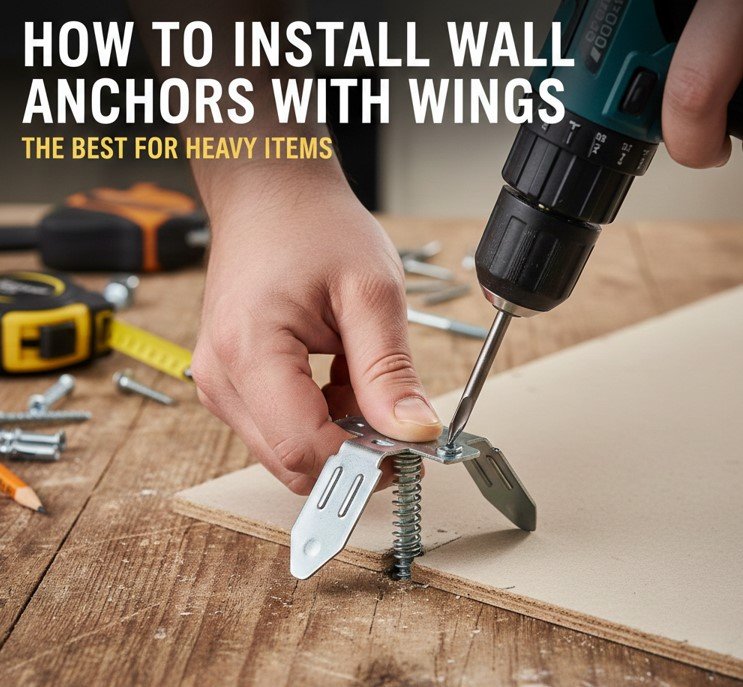
Wall anchors with wings, such as toggle bolts, are ideal for mounting heavy items. These anchors expand behind the wall, creating a strong grip that can support a significant amount of weight. Here’s how to install wall anchors with wings:
• Choose the right toggle bolt
Toggle bolts come in various sizes, so choose one based on the weight of the object you’re hanging. Larger bolts can support heavier items like large mirrors or shelves.
• Mark the spot
Use a level to mark where the toggle bolt will go. Ensure the location is centered and aligned with the object you’re hanging.
• Drill the pilot hole
Use a drill bit that matches the size of the toggle bolt. The hole should be large enough to allow the toggle to pass through but tight enough for a secure fit.
• Insert the toggle bolt
Insert the toggle bolt through the hole in the object and then into the drilled hole in the wall. The wings will collapse as you push them through the hole.
• Tighten the screw
Once the bolt is inside the wall, tighten the screw. The wings will expand behind the wall, creating a strong hold.
• Ensure it’s secure
After tightening, tug gently on the mounted item to ensure the toggle bolt has fully expanded and the item is securely fastened.
Also Read:- How to Wash Comforter: The Complete, Safe, and Expert-Approved Guide
How to Install Wall Anchors for Curtain Rods: A Step-by-Step Approach
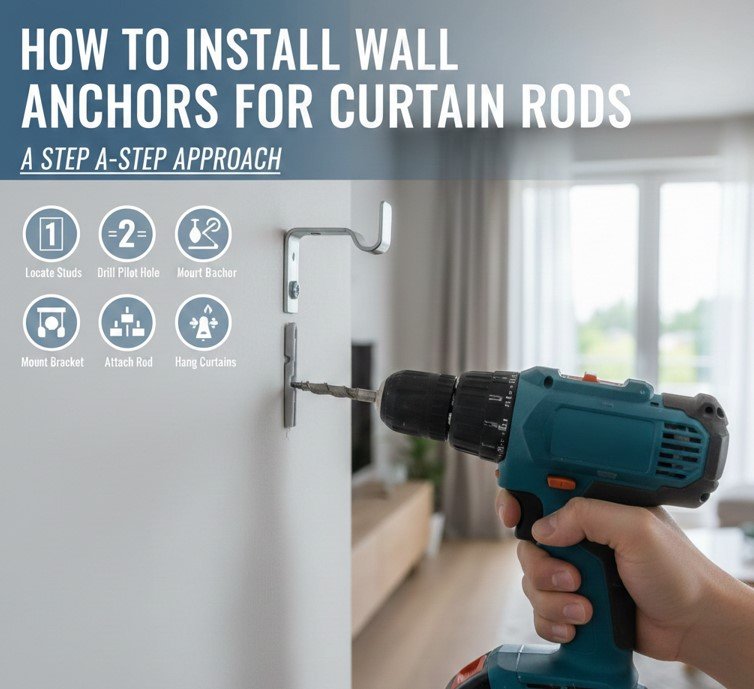
Mounting a curtain rod requires proper wall anchors to ensure it can hold the weight of the curtains. Here’s how to install wall anchors for curtain rods:
• Measure and mark the position
Use a tape measure and level to mark where you want the curtain rod to be placed. Ensure it’s even and at the correct height.
• Select the right anchor
For curtain rods, it’s important to use metal anchors or toggle bolts if the wall isn’t made of wood. These provide a secure hold for the weight of the curtains.
• Drill the hole
Drill a hole where the anchor will go. Use the appropriate size drill bit to ensure a snug fit for the anchor. If you’re drilling into drywall, be cautious not to make the hole too large.
• Insert the wall anchor
Insert the chosen anchor into the hole. For toggle bolts, you’ll need to collapse the wings, insert them, and then allow them to expand behind the wall.
• Install the curtain rod brackets
Once the anchor is in place, secure the curtain rod brackets to the wall using screws. Tighten them until they are secure, but avoid overtightening.
• Check the stability
Ensure the curtain rod is secure and can hold the weight of the curtains. Test the mounting by gently pulling on the curtain rod.
Also Read:- How to Use a Steamer: The Complete Guide for Cooking, Clothing, and Cleaning
How to Install Wall Anchors for Shelves: Secure Heavy Objects
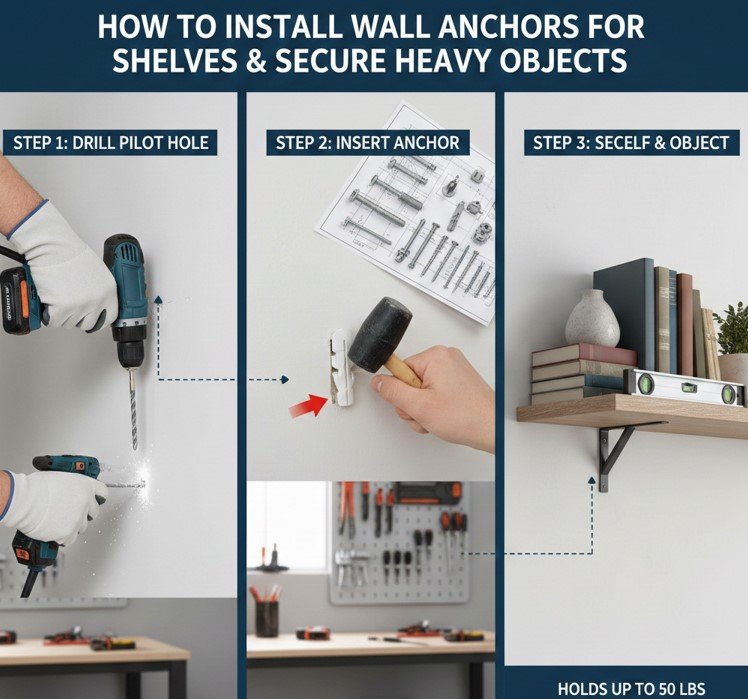
Installing shelves requires strong wall anchors to hold up the weight of books, decor, or other items. Here’s how to do it:
• Choose the right wall anchor
For shelves, choose metal anchors or toggle bolts for maximum support. These anchors are durable and can hold the weight of heavy objects.
• Measure and mark shelf placement
Carefully measure and mark the placement of the shelf on the wall. Use a level to ensure the shelf is straight.
• Drill pilot holes for anchors
Drill the pilot holes where you’ve marked the shelf brackets. The hole should be the same size as the anchor, ensuring a snug fit.
• Insert the wall anchors
Insert the wall anchors into the holes, tapping them lightly if necessary. For toggle bolts, make sure the wings expand behind the wall to secure the anchor.
• Mount the shelf brackets
Align the shelf brackets with the anchors and attach them with screws. Tighten the screws to secure the shelf brackets to the wall.
• Place the shelf and test
Place your shelf onto the mounted brackets and gently test its stability by placing objects on it. If the shelf feels loose, consider using stronger anchors.
Also Read:- How to Unclog Sink Drain: The Complete Homeowner’s Guide to Fast, Safe Fixes
How to Install Wall Anchors in Stucco: Proper Technique for Strong Hold
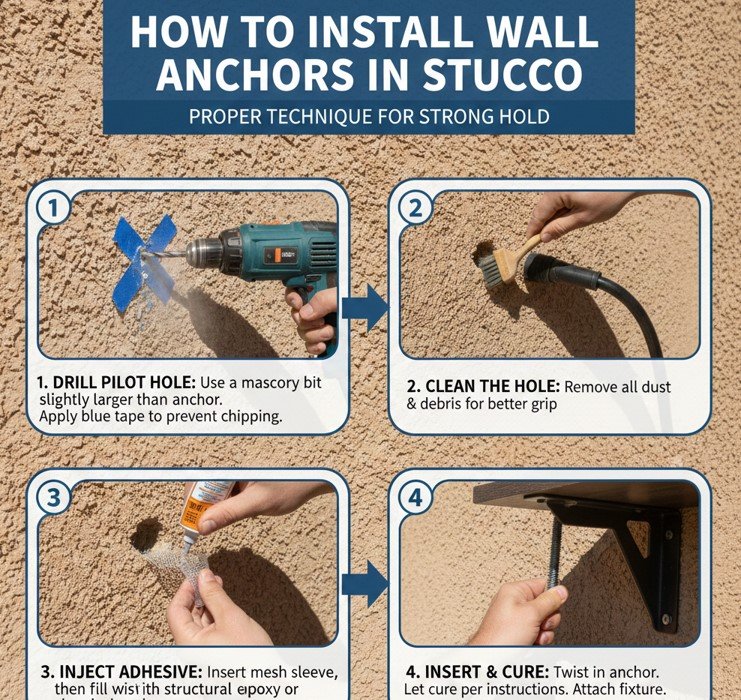
Stucco walls are more challenging to work with due to their texture and hardness, so the correct installation technique is crucial. Here’s how to install wall anchors in stucco:
• Choose the right anchor
For stucco, plastic anchors or toggle bolts work best. These anchors provide a strong grip on the porous and textured surface of stucco.
• Mark the placement
Measure and mark the desired location for the item you’re mounting. Ensure the marks are level and evenly spaced.
• Use a masonry drill bit
Drill a hole using a masonry drill bit to accommodate the anchor. Be sure to drill slowly and carefully to avoid cracking the stucco.
• Install the anchor
Insert the anchor into the drilled hole. Tap it lightly with a hammer if necessary to ensure it’s seated securely.
• Insert the screw or hook
Screw or hook the item into the anchor. Tighten carefully to avoid over-tightening, which can cause the anchor to slip or damage the wall.
• Check the stability
Test the mounted object by gently pulling on it. If it feels unstable, double-check the anchor installation and consider using a larger size.
Also Read:- How to Unclog Sink Drain: The Complete Homeowner’s Guide to Fast, Safe Fixes
Conclusion
Knowing how to install wall anchors is an essential skill for anyone who wants to mount items securely to walls. By following the right techniques and selecting the appropriate anchors for different surfaces—drywall, plaster, stucco, or wood—you can ensure your shelves, curtain rods, and pictures stay firmly in place. Whether you’re hanging light objects or heavy-duty installations, wall anchors provide the necessary support to keep your home looking neat and organized.
FAQs
Can I install wall anchors in concrete walls?
Yes, concrete walls require special masonry anchors or concrete screws, which are designed to hold in solid, durable materials.
How deep should I drill for wall anchors?
The depth of the hole depends on the size of the anchor. Always follow the manufacturer’s guidelines, but generally, the hole should be deep enough for the anchor to fit snugly.
Can I use wall anchors for mounting a TV?
Yes, you can use wall anchors to mount a TV, but make sure you use heavy-duty anchors or toggle bolts designed for the weight of the TV and the type of wall you’re mounting on.
Do I need wall anchors for every screw?
No, wall anchors are necessary only when you can’t screw directly into a stud or solid material. For lightweight items, screws into studs are typically sufficient.
How do I remove a wall anchor?
To remove a wall anchor, use pliers to pull it out. If it’s a screw-in anchor, you can unscrew it with a screwdriver. For stubborn anchors, you may need to drill it out or patch the hole afterward.
For More Info Visit Hola-Fly