Andrew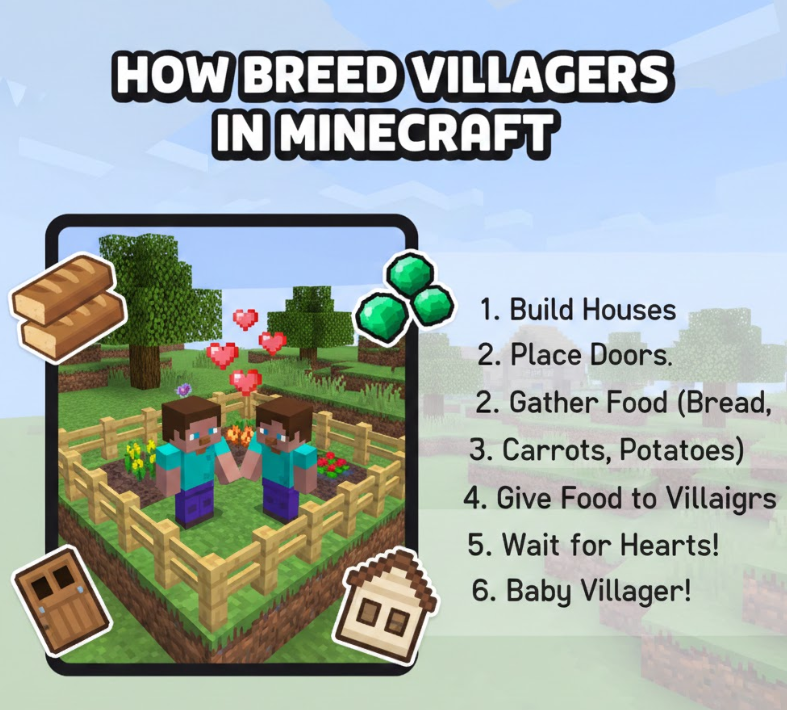
Breeding villagers in Minecraft is essential for players who want to expand their villages, create trading hubs, or automate farming. Understanding how to breed villagers not only helps grow your community but also allows you to design efficient trading systems and improve village security. Villagers are passive NPCs (non-player characters) that interact with players, offer trades, and perform work based on their professions.
The process of breeding villagers involves providing the right environment, ensuring they have access to beds and food, and understanding their willingness mechanics. Minecraft has evolved over the years, with updates affecting breeding mechanics, especially in Bedrock Edition and version 1.21. This guide provides step-by-step instructions for breeding villagers efficiently across all versions and platforms. By following these techniques, you can create thriving villages and maximize your trading potential.
How to Breed Villagers in Minecraft
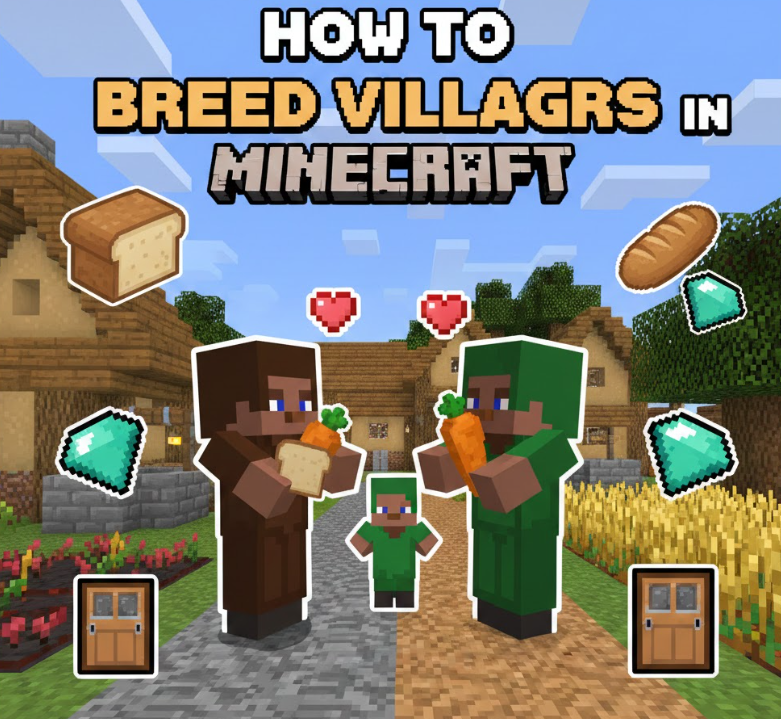
Breeding villagers in Minecraft requires understanding their basic mechanics. Villagers require both beds and sufficient food to enter “willing” mode, allowing them to mate and produce baby villagers. Ensuring the correct setup increases breeding efficiency and prevents villagers from wandering away.
Key Points Explained
• Understanding the willingness mechanic
A villager must be “willing” to breed. Willingness is triggered by having enough food (bread, carrots, potatoes, or beetroots) in their inventory. Each villager needs at least three bread or 12 carrots/potatoes/beetroots to become willing. Willing villagers interact with each other near beds to produce a baby villager.
• Providing beds
For successful breeding, each baby villager needs an unclaimed bed. The number of beds directly influences how many villagers can breed simultaneously. Make sure beds have at least one block of headroom and are accessible.
• Creating a safe environment
Villagers must be protected from zombies and other hostile mobs, which can interrupt breeding. Surround the breeding area with fences or walls and ensure proper lighting to prevent spawns.
• Feeding villagers
Villagers share food to increase willingness. You can throw food near them, which they pick up and use to trigger breeding behavior. Proper feeding speeds up the process and keeps villagers ready for multiple breeding cycles.
• Breeding timing
Villagers breed during the day when they are not working or sleeping. Keeping villagers idle near beds and providing food ensures optimal breeding times.
• Observing baby villager behavior
After breeding, baby villagers spawn near parents. They grow into adults over 20 minutes (real-time), at which point they can take up jobs or breed themselves if conditions are met.
Also Read:-How to Create and Add a Signature in Outlook Easily
How to Breed Villagers in Minecraft Bedrock Edition
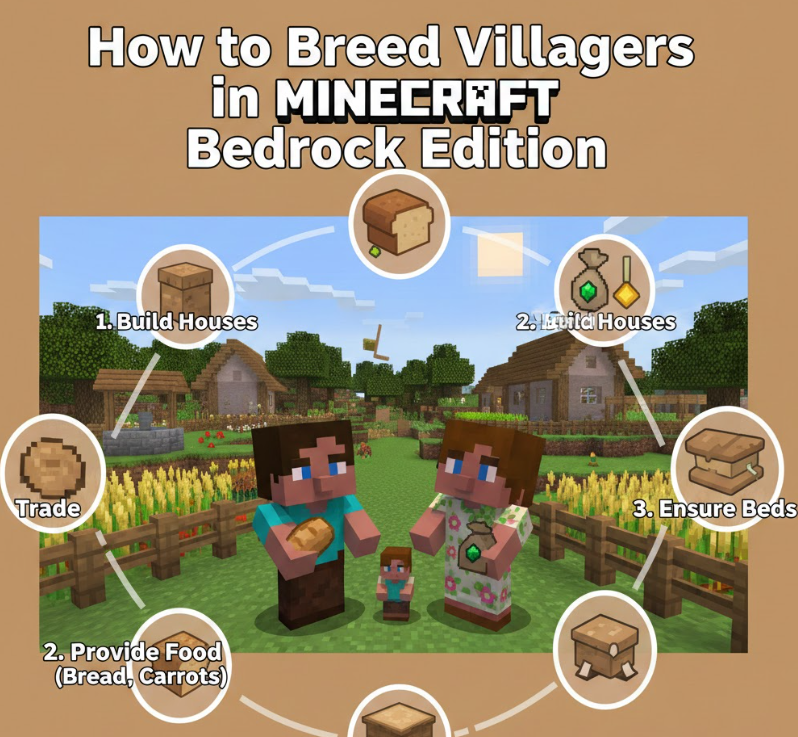
Breeding villagers in Minecraft Bedrock Edition differs slightly from Java Edition, primarily in how villagers detect food and beds. Bedrock players must ensure proper spacing, food distribution, and bed placement to maximize breeding success.
Key Points Explained
• Accessing Bedrock village mechanics
In Bedrock, villagers require the same willingness mechanics but may behave differently when navigating blocks or finding beds. Ensure paths to beds are clear and unblocked to prevent villagers from getting stuck.
• Food distribution in Bedrock Edition
Players can throw bread, carrots, potatoes, or beetroots for villagers. Unlike Java, villagers in Bedrock sometimes require manual food sharing to become willing. Observe villagers picking up food to confirm willingness.
• Bed requirements in Bedrock
Each baby villager needs a unique bed, just like in Java. Bedrock may require additional spacing between beds to ensure villagers recognize them, especially in tight village designs.
• Using enclosed breeding areas
Fencing or walls prevent villagers from wandering or being attacked by mobs. A secure area also keeps them in close proximity, which increases the chance of breeding.
• Timing and daylight mechanics
Villagers in Bedrock breed during specific times, usually during daylight hours. Ensure villagers have access to food and beds during these times for efficient breeding cycles.
• Observation and maintenance
Monitor villagers to ensure they are picking up food and interacting with beds. Sometimes, Bedrock villagers need minor adjustments in bed placement to trigger successful breeding.
Also Read:- How to Scan on iPhone: Complete Guide
How to Breed Villagers Minecraft (General Tips)
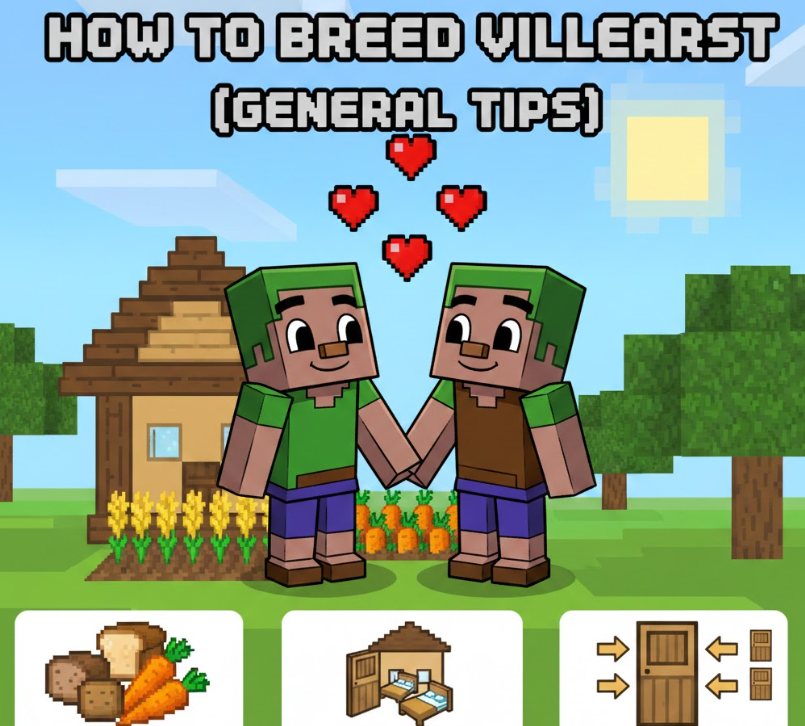
No matter the version, certain general strategies improve breeding success. These tips are essential for both beginners and advanced players looking to maintain a large, thriving village.
Key Points Explained
• Prioritize food supply
Always have an excess of food for villagers. Carrots, bread, potatoes, and beetroots are easiest to farm and distribute. Villagers use these resources to become willing, making food management crucial.
• Create multiple beds
Each baby villager requires a unique bed. Ensuring more beds than adult villagers prevents overcrowding and breeding failure. Arrange beds in rows or compact designs for efficient space use.
• Light up the area
Villagers do not breed in darkness due to hostile mob spawns. Place torches or glowstones to prevent zombies or skeletons from attacking, which can reduce breeding efficiency.
• Use fences or walls
A secure breeding area keeps villagers together and prevents wandering. Enclosed spaces increase interaction rates between willing villagers, which is essential for successful breeding.
• Monitor villager interactions
Willing villagers show hearts above their heads during breeding. Observing this behavior helps you understand when breeding occurs and if additional food or beds are needed.
• Patience is key
Breeding villagers takes time. Baby villagers grow into adults in 20 real-time minutes. Ensure continuous supply of food and beds to keep the cycle going without rushing.
Also Read:- How to Block Someone on TikTok: Comprehensive Guide
How to Breed Villagers 1.21

In Minecraft version 1.21, new mechanics and bug fixes affect villager breeding. Players should be aware of changes to beds, food mechanics, and village behavior to optimize breeding in this version.
Key Points Explained
• Updated villager pathfinding
Version 1.21 improves villager movement, making it easier for them to find beds. Ensure there are clear paths without obstacles for optimal breeding efficiency.
• Food mechanics tweaks
While the core willingness mechanic remains, 1.21 adjusts how villagers detect and share food. Throw food near villagers to trigger willingness rather than relying solely on manual feeding.
• Bed claiming adjustments
Babies require unclaimed beds. Version 1.21 fixes previous bugs where villagers sometimes ignored beds. Proper bed placement is critical for breeding success.
• Mob protection improvements
Villagers now respond more predictably to hostile mobs. Enclosures remain essential to prevent attacks that can interrupt breeding cycles.
• Trading and breeding synergy
Trading with villagers can influence their willingness indirectly. Offering trades ensures villagers are occupied and can affect breeding frequency in advanced farms.
• Observation and maintenance in 1.21
Always monitor interactions, bed occupancy, and food levels. Version 1.21 optimizes mechanics, but proactive maintenance ensures continuous population growth.
Also Read:- How to Cancel YouTube TV: Complete Guide
Conclusion
Learning how to breed villagers is crucial for expanding villages, creating trading hubs, and automating farms in Minecraft. Whether you are playing Java Edition, Bedrock Edition, or version 1.21, understanding villager willingness, food mechanics, and bed requirements ensures efficient and consistent breeding.
By providing secure spaces, abundant food, and sufficient beds, you can maintain a growing village, optimize trading systems, and design large-scale villager farms. Patience and proper management allow players to maximize their village population while enjoying the immersive and rewarding Minecraft gameplay experience.
FAQs
What food do villagers need to breed?
Villagers require bread, carrots, potatoes, or beetroots. Each villager needs 3 bread or 12 of other food items to become willing.
How many beds are required for breeding?
Each baby villager needs one unclaimed bed. Ensure there are more beds than adult villagers to prevent breeding issues.
Do villagers breed automatically?
Only if they are willing, near beds, and have food. Safe and well-lit areas improve breeding success.
Can villagers breed in all Minecraft versions?
Yes, but mechanics differ slightly. Version 1.21 improves pathfinding and bed detection for easier breeding.
How long does it take for baby villagers to grow?
Baby villagers grow into adults in 20 real-time minutes, after which they can take up professions and breed
For More Info Visit Hola-Fly