Andrew
Understanding how to feed sourdough starter is essential for successful homemade bread. A sourdough starter is a live culture of wild yeast and lactic acid bacteria that leavens bread naturally, giving it a rich flavor, light texture, and tangy aroma. Proper feeding ensures the starter remains active, healthy, and capable of producing consistent results in baking.
Many bakers struggle with feeding their starter correctly, especially when dealing with fridge storage, inconsistent schedules, or scaling recipes without a kitchen scale. Feeding involves replenishing the starter with fresh flour and water, maintaining the right hydration ratio, and timing the feedings so the yeast and bacteria thrive.
This comprehensive guide explains how to feed sourdough starter in multiple scenarios: from fridge storage, feeding without a scale, weekly maintenance, to adjusting ratios and preparing the starter before baking. You’ll learn tips, best practices, and actionable insights to keep your starter vigorous and reliable.
Understanding the Importance of Feeding Your Sourdough Starter

Feeding your sourdough starter is not just about adding flour and water; it is about maintaining the delicate balance of yeast and bacteria that creates the leavening power. When a starter is not fed regularly, it becomes weak, acidic, and may even develop a layer of hooch, a liquid byproduct that signals hunger.
Regular feeding refreshes the microbial population, provides necessary nutrients, and keeps the fermentation activity consistent. Knowing the why behind feeding allows bakers to troubleshoot problems, adjust ratios, and plan feeding schedules for fridge or counter storage.
Key Points on Starter Feeding Importance
• Maintains Yeast Activity
Feeding replenishes the sugars in flour that yeast consume, ensuring the starter remains active and capable of rising dough.
• Balances Acidity
The bacteria in starter produce lactic and acetic acids. Regular feeding prevents over-acidification, which can inhibit yeast growth.
• Prevents Starter Weakness
Neglected starters develop off smells and may not rise bread effectively.
• Ensures Flavor Development
Proper feeding helps control the tanginess of bread, giving a pleasant sour flavor rather than overpowering acidity.
• Promotes Predictable Results
Active, well-fed starter rises dough consistently and reduces the risk of dense loaves.
• Supports Long-Term Viability
Regular feeding keeps a starter alive for years, even decades, making it a valuable culinary resource.
Also Read : How to Draw Lips: A Complete Artistic Guide
How to Feed Sourdough Starter from Fridge
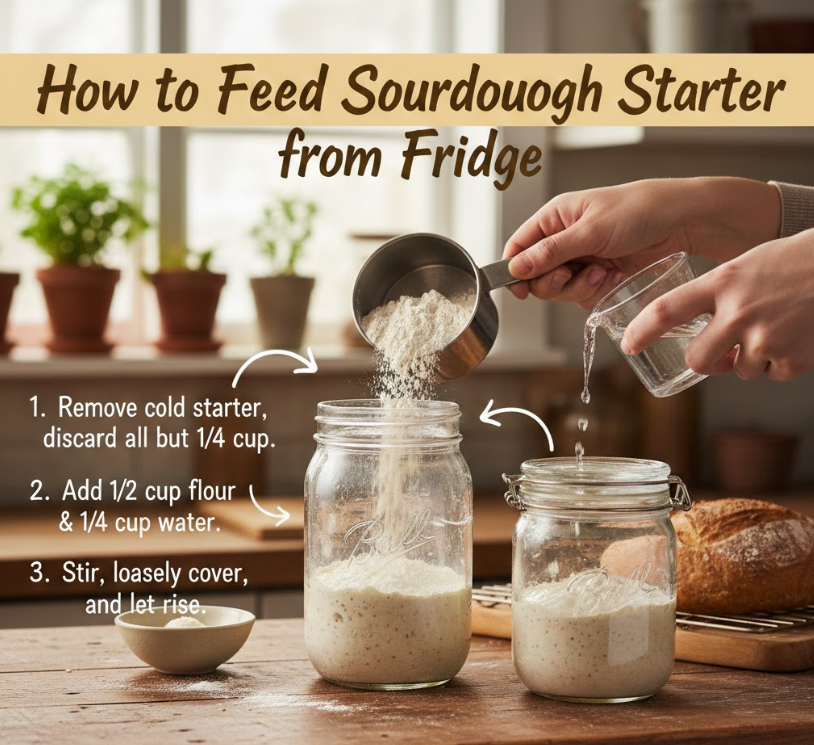
Many bakers store their starter in the fridge to slow fermentation. Learning how to feed sourdough starter from fridge ensures it wakes up healthy, active, and ready for baking. Cold storage slows yeast and bacterial activity, so proper feeding after refrigeration is critical.
Feeding Tips for Refrigerated Starters
• Remove Starter from Fridge
Allow it to reach room temperature before feeding to revive microbial activity.
• Discard Part of Starter
Removing 50–80% of the starter prevents over-acidification and avoids overly large volumes.
• Add Fresh Flour and Water
Feed with the same hydration as usual; water should be lukewarm to encourage activity.
• Mix Thoroughly
Even mixing distributes nutrients and aerates the culture, helping yeast thrive.
• Allow Bulk Fermentation
After feeding, let the starter sit at room temperature until bubbly and active before returning it to the fridge or baking.
• Frequency
Once fully awake, refrigerated starters typically need feeding at least once a week, or before every major bake.
Fridge storage is convenient, but understanding how to reactivate the starter ensures consistent bread quality.
Also Read : How to Grow Garlic: The Complete Beginner-to-Harvest Guide for Healthy, Flavorful Bulbs
How to Feed Sourdough Starter Without a Scale
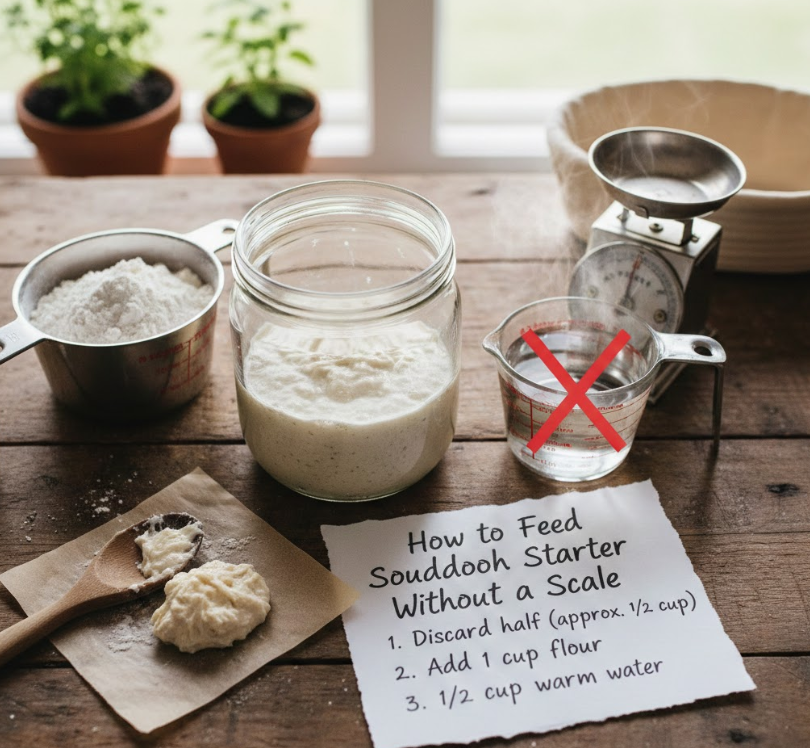
Not everyone has a kitchen scale, but you can successfully feed your starter without one. How to feed sourdough starter without a scale involves estimating volume ratios using standard measuring cups or spoons.
Tips for No-Scale Feeding
• Use Volume Measurements
Common ratios are 1:1:1 (starter:flour:water) by weight. Approximate this with ¼ cup starter, ¼ cup flour, ¼ cup water for small batches.
• Adjust Based on Starter Strength
If the starter is very active, smaller feeds suffice; for weaker starter, larger feeds may help boost activity.
• Consistency Is Key
Even without a scale, maintain roughly the same flour-to-water ratio each feeding.
• Check Texture
Starter should resemble thick pancake batter—adjust flour or water slightly if too runny or stiff.
• Mark Growth
Use a jar with markings or a rubber band to monitor doubling in volume.
• Observe Bubbling and Aroma
Visual and olfactory cues guide feeding success when precise weight isn’t available.
With practice, bakers can maintain robust starter without weighing ingredients.
Also Read : How to Cook Prime Rib: The Complete Expert Home Guide
How to Feed Sourdough Starter Once a Week
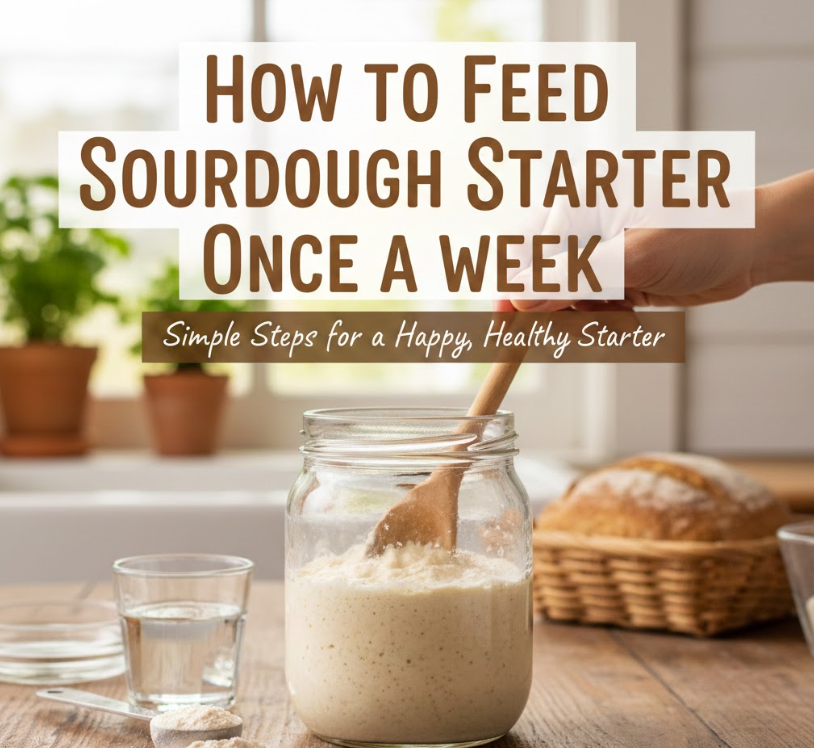
Many casual bakers feed their starter only weekly, especially when storing it in the fridge. How to feed sourdough starter once a week involves balancing nutrient replenishment with volume management.
Weekly Feeding Strategies
• Discard Before Feeding
Remove a portion to prevent excessive volume and acidity.
• Feed With Adequate Flour and Water
Use a moderate amount that sustains yeast and bacteria until the next feed.
• Mix Well
Ensure even hydration and oxygenation.
• Check for Activity
Even weekly-fed starter should bubble within a day at room temperature.
• Return to Fridge
After feeding, store in a clean jar, loosely covered, to maintain healthy activity.
• Plan Baking Accordingly
Feed at least once a day before baking for best rise; weekly feeding alone may not suffice for immediate baking.
Weekly maintenance reduces workload while keeping the starter viable for occasional baking.
Also Read : How to Fix a Zipper: The Complete Step-by-Step Repair Guide for Clothes, Bags, and Jackets
How to Feed Sourdough Starter Ratio
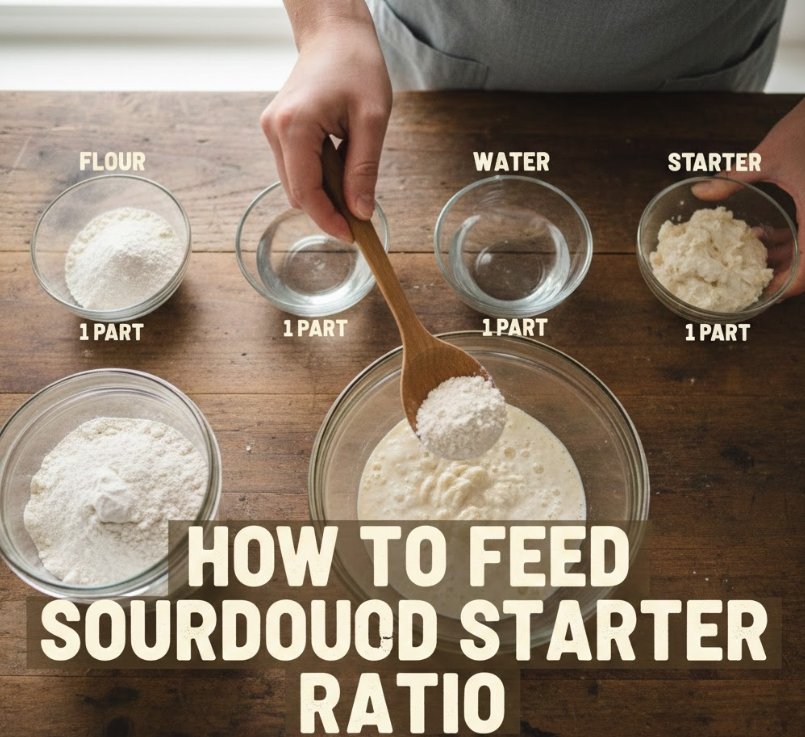
Correct sourdough starter ratio is critical for strong yeast activity and predictable fermentation. Ratios refer to the proportion of starter, flour, and water in each feed.
Understanding and Using Ratios
• Typical Ratio (1:1:1)
Equal parts starter, flour, and water by weight keeps starter stable.
• Higher Starter Percentage for Quick Activation
1:2:2 (starter:flour:water) speeds fermentation before baking.
• Adjust Water for Hydration
Hydration affects texture; thicker starter ferments slower, thinner starter rises faster.
• Volume Estimation Without Scale
Use cups or tablespoons approximating 1:1:1 by weight for convenience.
• Monitor Starter Response
Observe doubling time and bubble formation to tweak ratio if needed.
• Use Ratios to Plan Feeding Schedule
Higher ratio feeds may allow longer intervals; smaller ratios require more frequent feeding.
Understanding ratios gives control over timing, flavor, and leavening power.
Also Read : How to Eat Crawfish: The Complete Step-by-Step Guide to Enjoying Crawfish Like a Pro
How to Feed Sourdough Starter Before Baking

Feeding before baking is crucial for active fermentation and strong rise. The starter should be at peak activity, fully bubbly, and slightly domed.
Pre-Baking Feeding Steps
• Feed 8–12 Hours Ahead
Allows yeast to reach peak activity for dough mixing.
• Use Fresh, High-Protein Flour
Stronger flour boosts gluten development and fermentation.
• Hydrate Properly
Maintain familiar hydration ratio for predictability.
• Monitor Doubling Time
Starter should double in size and have visible bubbles before mixing into dough.
• Discard Excess Starter
Prevents overly sour flavor and ensures correct dough hydration.
• Room Temperature Activation
Bring refrigerated starter to room temperature before feeding for consistent performance.
Proper pre-bake feeding ensures strong leavening and optimal bread structure.
Conclusion
Mastering how to feed sourdough starter is key to successful bread baking. From fridge storage to weekly maintenance, understanding ratios, and pre-bake preparation ensures your starter remains active, healthy, and reliable.
Whether you feed daily, weekly, with a scale, or using simple volume measurements, attention to detail, observation, and consistency are critical. Proper feeding produces a bubbly, flavorful starter that gives you light, airy, and tangy loaves every time.
With these techniques, bakers of all levels can maintain a starter that thrives year-round, providing both convenience and exceptional baking results.
FAQs
Can I feed sourdough starter straight from the fridge?
Yes, but allow it to come to room temperature and discard a portion before feeding for optimal activation.
Do I need a scale to feed my starter?
No, you can estimate using cups or spoons, maintaining roughly 1:1:1 ratios by weight.
How often should I feed my starter if I bake weekly?
Once a week is sufficient for fridge storage, but feed 8–12 hours before baking to ensure peak activity.
For More Info Visit Hola-Fly